Table of Contents
- 1. Master Your Google Business Profile
- 2. Build Consistent Local Citations
- 3. Implement a Proactive Review Strategy
- 4. Deploy Local Business Schema Markup
- 5. Target Hyper-Local Keywords
- 6. Architect Location-Specific Pages
- 7. Audit On-Page Local Signals
- 8. Earn Community-Driven Backlinks
- 9. Optimize for Mobile-First Local Search
- 10. Engage in Digital & Physical Community Building
- 11. Publish Neighborhood-Relevant Content
1. Master Your Google Business Profile
Your Google Business Profile (GBP) is the cornerstone of local SEO in 2026. It directly influences your visibility in the Local Pack, Google Maps, and AI-generated local recommendations. Optimizing it goes far beyond filling out basic information.

Advanced GBP optimization checklist:
- Complete every field: Fill out services, products, attributes, and business hours with precision
- Use high-quality photos: Upload original images of your storefront, team, and work regularly
- Leverage GBP Posts: Share updates, offers, and events weekly to signal activity to Google
- Enable messaging: Allow direct customer communication through your profile
- Monitor Q&A: Proactively answer common questions to control the narrative
- Track insights: Use GBP analytics to understand how customers find and interact with your listing
Pro Tip: AI Search Optimization
In 2026, AI assistants pull heavily from GBP data. Ensure your business description clearly states what you do, who you serve, and your unique value proposition. AI systems prioritize structured, unambiguous business information.
2. Build Consistent Local Citations
Citations are online mentions of your business name, address, and phone number (NAP). Consistency across directories is a critical trust signal for search engines. Inconsistent NAP data confuses algorithms and hurts local rankings.
Where to build citations:
- Core directories: Yelp, Bing Places, Apple Maps, Facebook, Yellow Pages
- Industry-specific: TripAdvisor (hospitality), Healthgrades (medical), Avvo (legal)
- Local chambers: City business directories, regional tourism boards
- Data aggregators: Foursquare, Data Axle, Neustar/Localeze
Best practices for citation management:
- Use exact NAP formatting across all platforms
- Avoid abbreviations unless universally recognized
- Claim and verify existing listings before creating duplicates
- Audit citations quarterly using free tools or manual checks
3. Implement a Proactive Review Strategy
Reviews are among the strongest local ranking factors. They influence both algorithmic visibility and consumer trust. A strategic approach to review generation and management is non-negotiable in 2026.
Reviews aren't just social proof—they're direct ranking signals. Businesses that consistently earn 4+ star reviews and respond to 80%+ of them see 2.5x more local pack visibility than those that don't.
Review management framework:
- Automate requests: Use email/SMS follow-ups post-purchase or service completion
- Make it easy: Provide direct links to your Google review page
- Respond to all reviews: Thank positive reviewers, address negative feedback professionally
- Never incentivize: Google strictly prohibits paying for or offering discounts in exchange for reviews
- Monitor patterns: Track recurring complaints to improve operations
Handling Negative Reviews
Respond within 24-48 hours. Acknowledge the issue, apologize sincerely, and offer to resolve it offline. A professional response to a negative review often builds more trust than a perfect 5-star rating.
4. Deploy Local Business Schema Markup
Schema markup is structured data that helps search engines understand your business details. LocalBusiness schema explicitly communicates your NAP, hours, services, and geographic service area to algorithms.
<script type="application/ld+json">
{
  "@context": "https://schema.org",
  "@type": "LocalBusiness",
  "name": "Your Business Name",
  "image": "https://example.com/logo.jpg",
  "address": {
    "@type": "PostalAddress",
    "streetAddress": "123 Main St",
    "addressLocality": "City",
    "addressRegion": "State",
    "postalCode": "12345"
  },
  "telephone": "+1-555-123-4567",
  "openingHours": "Mo-Fr 09:00-17:00"
}
</script>
Implementation steps:
- Use Google's Structured Data Markup Helper to generate code
- Place schema in the
<head>or before</body> - Validate with Google's Rich Results Test tool
- Update schema whenever business information changes
5. Target Hyper-Local Keywords
Local keywords include geographic modifiers that indicate purchase intent. In 2026, voice search and AI assistants have made conversational, long-tail local queries more important than ever.
Keyword research strategy:
- Seed terms: Start with core services (e.g., "plumber," "dentist," "restaurant")
- Add location modifiers: City, neighborhood, "near me," zip code
- Identify intent: Focus on commercial and transactional queries
- Use free tools: Google Keyword Planner, Google Trends, Search Console
| Keyword Type | Example | Intent |
|---|---|---|
| Service + City | "emergency plumber Dallas" | High commercial |
| Near Me | "coffee shop near me" | Immediate transactional |
| Neighborhood | "best pizza in Capitol Hill" | Research/decision |
| Voice Query | "Where can I get my car fixed open now?" | Conversational/urgent |
6. Architect Location-Specific Pages
For multi-location businesses, dedicated location pages are essential. Each page should be uniquely optimized for its specific geographic area, avoiding duplicate content penalties.
Location page checklist:
- Unique H1 with city/neighborhood name
- Localized content (neighborhood landmarks, local events, community ties)
- Embedded Google Map with exact location pin
- Location-specific NAP and hours
- Customer testimonials from that area
- Internal links to main service pages and other locations
Avoid Doorway Pages
Google penalizes thin, duplicate location pages created solely for ranking. Each page must provide genuine, unique value to users in that specific location.
7. Audit On-Page Local Signals
On-page SEO for local search requires embedding geographic relevance throughout your site. Search engines look for consistent local signals across titles, headers, content, and metadata.
Key on-page local optimizations:
- Title tags: Include primary keyword + location (e.g., "Roofing Services | Austin, TX")
- Meta descriptions: Mention service area and local differentiators
- Header tags: Use H2/H3 tags with neighborhood or city references
- Body content: Naturally mention local landmarks, events, and community involvement
- Footer: Include full NAP and service area map
8. Earn Community-Driven Backlinks
Local backlinks from authoritative, geographically relevant websites are powerful ranking signals. They demonstrate community trust and topical authority to search engines.
Local link building strategies:
- Sponsorships: Support local sports teams, charities, or events
- Chamber of Commerce: Join and get listed on their member directory
- Local news: Pitch newsworthy stories to regional journalists
- Partnerships: Collaborate with complementary local businesses
- Community resources: Create local guides, event calendars, or neighborhood directories
Local links aren't about quantity—they're about relevance. A single link from a respected local newspaper or university often outweighs dozens of generic directory links.
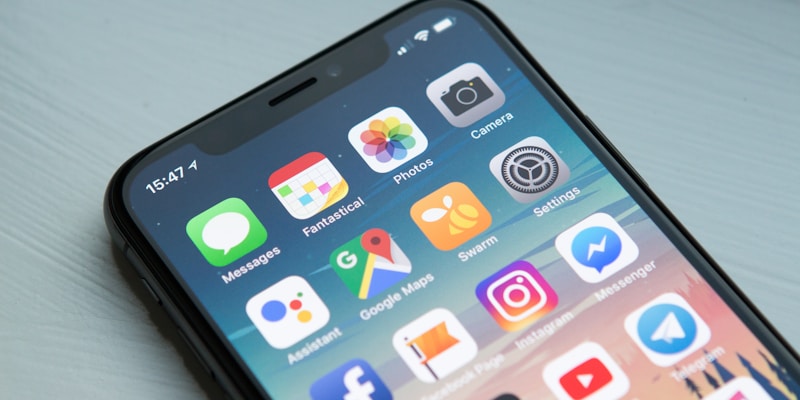
9. Optimize for Mobile-First Local Search
Over 70% of local searches occur on mobile devices. Google's mobile-first indexing means your mobile site is the primary version evaluated for rankings. A poor mobile experience directly hurts local visibility.
Mobile optimization priorities:
- Responsive design: Ensure seamless adaptation across all screen sizes
- Tap targets: Buttons and links must be easily clickable (minimum 48x48px)
- Page speed: Aim for under 2.5 seconds load time on mobile
- Click-to-call: Make phone numbers prominently clickable
- Directions integration: Link directly to Google Maps for navigation
10. Engage in Digital & Physical Community Building
Local SEO extends beyond technical optimization. Genuine community engagement generates organic mentions, reviews, and backlinks that algorithms recognize as authentic trust signals.
Community engagement tactics:
- Host or sponsor local workshops, meetups, or charity events
- Participate in neighborhood Facebook groups and Nextdoor
- Collaborate with local influencers or bloggers
- Feature local customers or success stories on your website
- Attend city council meetings or business association events
11. Publish Neighborhood-Relevant Content
Content that speaks directly to your local audience demonstrates expertise and builds topical authority. It also captures long-tail local search queries that competitors often ignore.
Local content ideas:
- Neighborhood guides and area spotlights
- Local event coverage and recaps
- Case studies featuring local clients
- Seasonal tips specific to your climate/region
- Interviews with local business owners or community leaders
Content Distribution Strategy
Share local content through community newsletters, local Facebook groups, and neighborhood apps. Encourage local partners to share it. This amplifies reach and generates natural local backlinks.
Measuring Local SEO Success in 2026
Tracking the right metrics ensures your local SEO efforts deliver measurable business results. Focus on these key performance indicators:
| Metric | Tool | Why It Matters |
|---|---|---|
| Local Pack Rankings | Google Search Console, Manual Tracking | Direct visibility for high-intent local searches |
| GBP Insights | Google Business Profile Dashboard | Tracks calls, direction requests, and website clicks |
| Review Volume & Rating | GBP, Yelp, Industry Directories | Impacts rankings and consumer trust |
| Local Organic Traffic | Google Analytics 4 | Measures website visits from local search queries |
| Citation Consistency | Manual Audit, Free Citation Checkers | Ensures NAP accuracy across the web |
Local SEO in 2026 isn't about gaming algorithms—it's about becoming the most visible, trusted, and helpful business in your community. The technical optimizations simply amplify what you're already doing right.
Further reading: Digital Advertising Trends 2026 · Backlink Analysis SEO Strategy Guide · What is E-A-T SEO Google · 2026 SEO · A Practitioner s Guide to