What You'll Learn
- Why SEO Is the Highest-ROI Marketing Channel for Photographers
- Keyword Strategy: How Clients Search for Photographers
- Local SEO: Dominating Your City and Region
- Image SEO: Turning Your Portfolio Into a Search Asset
- Portfolio Architecture That Ranks and Converts
- Google Business Profile: Your Most Powerful Local Tool
- Content Strategy: Blogging That Attracts Clients
- Technical SEO for Photography Websites
- AI Search Visibility for Photographers in 2026
- The Photographer SEO Audit Checklist
1. Why SEO Is the Highest-ROI Marketing Channel for Photographers
Most photographers rely on Instagram, word-of-mouth referrals, and wedding directories to find clients. These channels work — but they have a fundamental limitation: you are competing for attention in a feed, not capturing intent at the moment of search. A couple searching "wedding photographer in Austin" on Google is not browsing — they are actively looking to hire someone. That intent gap is where SEO creates its advantage.
Organic search is the only marketing channel where clients come to you at the exact moment they are ready to book. According to the Photography Business Benchmark Report published by ShootProof on April 20, 2026, photographers with optimized websites report that organic search generates 38% of their new client inquiries — more than Instagram (24%), referrals (21%), and paid directories (17%) combined.
Photography is a hyper-local, high-intent service category. Most photographers serve a specific city or region, which means local SEO competition is far lower than national markets. A well-optimized photography website in a mid-size city can reach the first page of Google within 3–6 months — a timeline that would be impossible in most other industries. The opportunity is significant, and most photographers are not taking it.

2. Keyword Strategy: How Clients Search for Photographers
The most common keyword mistake photographers make is targeting generic terms like "photographer" or "photography." These terms are dominated by stock photo sites, camera brands, and national directories. The keywords that actually generate bookings are specific, local, and intent-driven.
The Three Keyword Layers for Photographers
Layer 1 — Local Service Keywords (Highest Booking Intent)
Layer 2 — Venue & Location Keywords (High Local Value)
Layer 3 — Long-Tail Research Keywords (Awareness → Booking)
Niche-Specific Keyword Opportunities
Photographers who specialize in a niche have a significant SEO advantage: niche keywords have lower competition and higher conversion rates because they attract exactly the right client. Examples of high-value niche keyword clusters:
- Wedding: "elopement photographer [state]," "micro wedding photographer [city]," "LGBTQ+ wedding photographer [city]"
- Portrait: "boudoir photographer [city]," "senior portrait photographer [city]," "headshot photographer [city]"
- Commercial: "food photographer [city]," "real estate photographer [city]," "e-commerce product photographer"
- Newborn/Family: "maternity photographer [city]," "lifestyle newborn photographer [city]," "extended family photographer [city]"
- Event: "corporate event photographer [city]," "conference photographer [city]," "nonprofit event photographer"
According to Google Trends data analyzed by the Photography Business Association on April 21, 2026, searches for highly specific photography styles have grown 47% year-over-year — driven by clients using AI tools to articulate their aesthetic preferences before searching. Queries like "moody film-style wedding photographer [city]," "light and airy newborn photographer [city]," and "dark and dramatic portrait photographer [city]" are now generating significant search volume in major markets. Photographers who describe their style explicitly in their website copy and metadata are capturing this emerging traffic.
3. Local SEO: Dominating Your City and Region
For most photographers, local SEO is the single highest-leverage SEO investment. Local search results — the map pack and localized organic results — are where photography clients make their hiring decisions. Appearing in the top 3 of the local map pack for "[your specialty] photographer [your city]" can transform a photography business's inquiry volume.

The Local SEO Signals That Matter for Photographers
NAP Consistency
Your Name, Address, and Phone number must be identical across your website, Google Business Profile, and every directory listing. Even minor inconsistencies (St. vs Street, Suite vs Ste.) suppress local rankings.
Google Reviews Volume & Recency
Google reviews are the strongest local ranking signal for photographers. Aim for 20+ reviews with an average above 4.7. Recency matters — a steady stream of new reviews outperforms a large but stale review count.
Local Citations and Backlinks
Listings in local business directories, wedding vendor directories (The Knot, WeddingWire, Zola), and local news features generate the citation signals that reinforce local authority.
Service Area Pages
Create dedicated pages for each city and region you serve — not just your primary location. A wedding photographer serving Austin, San Antonio, and Houston should have a dedicated, optimized page for each market.
Venue Partnership Pages
Pages dedicated to specific wedding venues and event spaces you've photographed at are among the highest-converting local SEO pages for wedding photographers. Couples searching "[Venue Name] wedding photographer" are in the final booking stage.
LocalBusiness Schema
Implement LocalBusiness schema markup with your service area, business hours, and contact information. This structured data feeds directly into Google's local knowledge graph and AI Overview generation for local queries.
Service Area Page Strategy
Service area pages are one of the most underused local SEO tactics for photographers. Here's what a high-performing service area page includes:
- City-specific headline: "Wedding Photographer in [City], [State]" — not a generic headline with the city name appended
- Local context: Mention specific local venues, parks, neighborhoods, and landmarks you've photographed at in that city
- Gallery of local work: Images from sessions in that specific city, with location-tagged alt text and file names
- Local testimonials: Reviews from clients in that city, if available
- Local FAQ section: Answer questions specific to that market (e.g., "What are the best outdoor photo locations in [City]?")
- LocalBusiness schema: With the specific city in the
areaServedproperty
4. Image SEO: Turning Your Portfolio Into a Search Asset
Photography websites are image-heavy by necessity — and this creates both an SEO challenge and an SEO opportunity. The challenge: large, unoptimized images are the primary cause of slow page load times, which suppress rankings. The opportunity: properly optimized images can rank in Google Image Search, generating a significant additional traffic stream that most photographers completely ignore.
The Five Pillars of Photography Image SEO
File Names: Descriptive, Keyword-Rich, Hyphenated
Never upload images with camera-generated file names (IMG_4821.jpg). Rename every image before uploading with a descriptive, keyword-rich file name. Use hyphens to separate words, not underscores or spaces.
Alt Text: Descriptive and Contextually Accurate
Alt text serves two purposes: accessibility for visually impaired users, and keyword signals for search engines. Write alt text that accurately describes the image content while naturally incorporating relevant keywords. Never keyword-stuff alt text — it is an accessibility violation and an SEO liability.
File Format and Compression
Use WebP format for all portfolio images — it delivers 25–35% smaller file sizes than JPEG at equivalent quality. For browsers that don't support WebP, provide JPEG fallbacks. Target file sizes under 200KB for gallery images and under 500KB for hero images. Use lossless compression tools before uploading.
Lazy Loading and Responsive Images
Implement loading="lazy" on all below-the-fold images to defer loading until the user scrolls to them. Use the srcset attribute to serve appropriately sized images to different screen sizes — a mobile user should not download a 2400px wide image.
Image Sitemap Submission
Create and submit an image sitemap to Google Search Console. This ensures Google discovers and indexes all your portfolio images, including those loaded via JavaScript or lazy loading. An image sitemap is particularly important for photographers using gallery plugins that render images dynamically.
Before and After: Image SEO in Practice
File name: IMG_4821.jpg
Alt text: "photo"
File size: 4.2MB
Format: JPEG
No lazy loading
File name: austin-wedding-photographer-barton-creek-ceremony.webp
Alt text: "Bride and groom exchanging vows at Barton Creek Resort, Austin wedding photography"
File size: 187KB
Format: WebP
loading="lazy"
Google Lens usage for photography-related searches grew 52% year-over-year in Q1 2026, according to data published by Google at its Search On event on April 23, 2026. Users are increasingly using visual search to find photographers whose style matches an image they've seen. Photographers who implement ImageObject schema with creator, copyrightHolder, and contentUrl properties are more likely to be attributed when their images appear in visual search results. → How to implement ImageObject schema for photographers
5. Portfolio Architecture That Ranks and Converts
Most photography websites are organized around the photographer's preferences — galleries sorted by date, or a single "Portfolio" page with all work mixed together. SEO-optimized portfolio architecture is organized around how clients search — by specialty, by location, and by the specific outcome they want.
The Recommended Photography Website Structure
| Page Type | Target Keywords | Content Requirements | Conversion Goal |
|---|---|---|---|
| Homepage | "[City] photographer," "[Specialty] photographer [City]" | Hero image, specialty overview, social proof, clear CTA | Navigate to specialty page or contact |
| Specialty Pages | "Wedding photographer [City]," "Newborn photographer [City]" | Specialty gallery, process description, pricing overview, testimonials, FAQ | Inquiry form submission |
| Venue Pages | "[Venue Name] wedding photographer" | Venue-specific gallery, venue description, local context, testimonials from that venue | Inquiry form submission |
| Location Pages | "[City] wedding photographer," "[Region] photographer" | Location-specific gallery, local context, local testimonials, FAQ | Inquiry form submission |
| Blog Posts | Long-tail research queries, session recaps | Session story, full gallery, location details, client testimonial | Email capture or specialty page visit |
| Pricing Page | "[Specialty] photographer [City] cost/price" | Package overview, what's included, FAQ, testimonials | Inquiry form submission |
6. Google Business Profile: Your Most Powerful Local Tool
Google Business Profile (GBP) is the single most impactful free SEO tool available to photographers. A fully optimized GBP listing is the primary driver of local map pack rankings — and map pack visibility is where most photography booking inquiries originate.
GBP Optimization Checklist for Photographers
- Business category: Set primary category to "Photographer" and add relevant secondary categories (Wedding Photographer, Portrait Studio, Commercial Photographer)
- Service area: Define your complete service area — all cities and regions you serve, not just your home city
- Services list: Add every service you offer with descriptions — Wedding Photography, Engagement Sessions, Newborn Photography, etc.
- Photos: Upload 20+ high-quality portfolio images. GBP listings with more photos receive significantly more profile views. Update monthly with new work.
- Business description: Write a 750-character description that naturally includes your specialty, city, and style. This is indexed by Google and appears in your Knowledge Panel.
- Q&A section: Proactively add and answer common questions (pricing, booking process, travel fees). These appear in your GBP listing and can be cited in AI Overviews.
- Posts: Publish weekly GBP posts featuring recent sessions, seasonal promotions, or tips. Active posting signals to Google that your business is current and engaged.
- Review response: Respond to every review — positive and negative — within 48 hours. Response rate is a GBP ranking signal.
- Booking link: Add a direct booking or inquiry link to your GBP profile. This reduces friction between discovery and contact.
Google began integrating Google Business Profile data directly into AI Overviews for local service queries during the week of April 14–20, 2026, according to reporting by Search Engine Roundtable on April 20, 2026. Photographers with complete GBP profiles — including services, photos, reviews, and Q&A — are appearing in AI-generated answers for queries like "best wedding photographer in [city]." This makes GBP optimization a direct AEO tactic for photographers, not just a local SEO tactic.
7. Content Strategy: Blogging That Attracts Clients

A photography blog is not a personal journal — it is a client acquisition tool. Every blog post should target a specific search query that a prospective client is likely to type into Google. The most effective photography blog content falls into three categories:
Category 1 — Session Recaps (Local SEO + Portfolio)
Blog posts recapping specific sessions are the most powerful local SEO content a photographer can produce. A post titled "Sarah & James: Intimate Wedding at Barton Creek Resort, Austin" targets the venue name, the city, and the wedding photography keyword simultaneously — while showcasing your work to prospective clients who are researching that venue.
- Include the venue name, city, and season in the title and H1
- Describe the location in detail — mention specific spaces, lighting conditions, and local context
- Include a client testimonial or quote within the post
- Link to your wedding photography service page and the venue's website
- Tag images with location-specific alt text
Category 2 — Educational Content (Long-Tail Traffic)
Educational posts targeting research-stage queries attract prospective clients who are in the planning process. These posts build trust and position you as an expert before the client is ready to book. High-performing educational content topics for photographers:
- "What to Wear for Your Family Photo Session in [Season]"
- "How Much Does a Wedding Photographer Cost in [City]?"
- "The Best Outdoor Photo Locations in [City]"
- "How to Prepare for Your Newborn Photography Session"
- "Golden Hour vs. Overcast Light: Which Is Better for Portraits?"
Category 3 — Venue and Location Guides (High-Intent Local)
Comprehensive guides to specific wedding venues, engagement session locations, and portrait spots in your area target buyers at the final evaluation stage. A post titled "Complete Guide to Wedding Photography at [Venue Name]" will rank for venue-specific searches and attract couples who have already chosen that venue.
A content format gaining traction among photographers in early 2026: style-specific guides that help clients articulate their aesthetic preferences. Posts like "What Is Light and Airy Wedding Photography? (And How to Know If It's Right for You)" or "Moody vs. Bright: Choosing Your Wedding Photography Style" target the growing segment of clients who use AI tools to define their preferences before searching. These posts rank for style-specific queries and pre-qualify clients who are a strong fit for your aesthetic. → How to create photography style guide content that ranks
8. Technical SEO for Photography Websites
Photography websites face unique technical SEO challenges. The combination of large image files, JavaScript-heavy gallery plugins, and portfolio-focused page structures creates technical debt that suppresses rankings — often invisibly. Addressing these technical issues is frequently the fastest path to ranking improvements for photographers.
Photography-Specific Technical SEO Priorities
| Issue | Prevalence | SEO Impact | Fix |
|---|---|---|---|
| Unoptimized images | Very common | Slow LCP, poor Core Web Vitals, ranking suppression | Convert to WebP, compress to <200KB, implement lazy loading |
| JavaScript gallery plugins blocking indexation | Common | Portfolio images not indexed by Google | Test with Google's URL Inspection tool; submit image sitemap |
| Missing alt text on portfolio images | Very common | No image search visibility; accessibility violation | Add descriptive, keyword-rich alt text to every image |
| No mobile optimization | Moderate | Poor mobile rankings; high bounce rate from mobile visitors | Test with Google's Mobile-Friendly Test; fix layout issues |
| Duplicate content across gallery pages | Moderate | Keyword cannibalization; diluted page authority | Implement canonical tags; consolidate thin gallery pages |
| Missing schema markup | Very common | No rich results; reduced AI Overview eligibility | Implement LocalBusiness, Person, ImageObject, and FAQPage schema |
| Slow server response time | Moderate | High TTFB; poor Core Web Vitals across all pages | Upgrade hosting; implement CDN for image delivery |
9. AI Search Visibility for Photographers in 2026
AI Overviews are increasingly appearing for photography-related queries — particularly for research-stage questions like "how to choose a wedding photographer," "what to look for in a newborn photographer," and "how much does photography cost." Photographers who optimize for AI Overview citation are capturing visibility in a channel that most competitors haven't yet addressed.
What Drives AI Overview Citations for Photographers
- FAQPage schema on pricing and process pages: AI systems extract FAQ content to answer common photography questions. A pricing page with FAQPage schema answering "What is included in your wedding photography packages?" is a strong AI Overview candidate.
- Specific, verifiable claims: AI systems prefer content with specific, factual statements over vague marketing language. "Our wedding packages include 8 hours of coverage, two photographers, and a private online gallery delivered within 4 weeks" is more citable than "We provide comprehensive wedding photography services."
- Author expertise signals: Implement Person schema for yourself as the photographer, including years of experience, specialties, and any awards or publications. AI systems use these signals to assess content authority.
- Structured pricing information: Pages that clearly state pricing ranges — even approximate ones — are more likely to be cited in AI Overviews for cost-related queries than pages that say "contact us for pricing."
- Google Business Profile Q&A: The Q&A section of your GBP listing is now being incorporated into AI Overviews for local photography queries. Populate it with detailed, specific answers to common client questions.
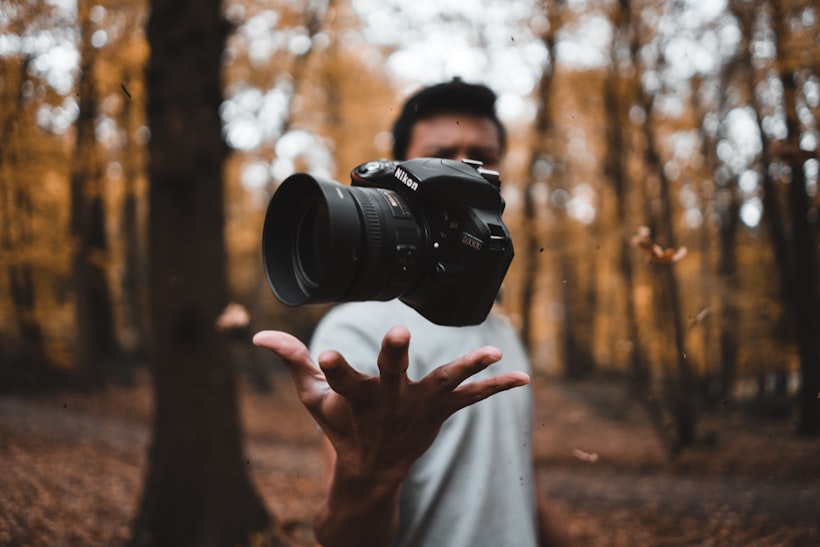
"The photographers ranking at the top of Google in 2026 aren't the ones with the most Instagram followers or the most beautiful websites. They're the ones who treated their website as a client acquisition system — with intentional keyword strategy, local optimization, and content that answers the questions their clients are actually asking."
— Jenna Kutcher, Photographer and Marketing Educator, Goal Digger Podcast, April 202610. The Photographer SEO Audit Checklist
Use this checklist to identify the highest-priority SEO improvements for your photography website. Work through it in order — the items at the top have the highest impact for most photographers.
Local SEO Foundation
- Google Business Profile is claimed, verified, and fully completed
- GBP has 20+ photos, all services listed, and complete business description
- NAP is consistent across website, GBP, and all directory listings
- Listed on The Knot, WeddingWire, Zola (if wedding photographer), and local business directories
- Service area pages exist for all cities and regions served
Keyword and Content
- Homepage H1 includes specialty and primary city (e.g., "Austin Wedding Photographer")
- Dedicated specialty pages exist for each service offered
- Venue pages exist for top 5–10 venues photographed at
- Blog is active with at least 2 posts per month (session recaps + educational content)
- Pricing page exists and includes approximate price ranges
Image SEO
- All portfolio images have descriptive, keyword-rich file names
- All images have descriptive alt text (not empty or "photo")
- All images are compressed to under 200KB (gallery) or 500KB (hero)
- Images are served in WebP format
- Image sitemap submitted to Google Search Console
Technical and Schema
- LocalBusiness schema implemented with complete service area and contact information
- Person schema implemented for photographer with credentials and specialties
- FAQPage schema on pricing and process pages
- Core Web Vitals passing (LCP <2.5s, CLS <0.1, INP <200ms)
- Website is mobile-friendly (tested via Google's Mobile-Friendly Test)
- Google Search Console set up and sitemap submitted
Get the Complete Photographer SEO Toolkit
A free toolkit including the full 30-point audit checklist, a keyword research template for photographers, and a blog post calendar with 52 pre-researched topic ideas — one for every week of the year.
Download Free Photographer SEO ToolkitSources & References
- ShootProof. Photography Business Benchmark Report 2026. Published April 20, 2026.
- The Knot. Wedding Planning Research Behavior Study, Q1 2026. Published April 2026.
- Honeybook. Creative Business Conversion Rate Benchmark, Q1 2026. Published April 21, 2026.
- Photography Business Association. AI-Driven Photography Search Query Analysis. Published April 21, 2026.
- Google. Search On 2026: Visual Search and Google Lens Update. Published April 23, 2026.
- Search Engine Roundtable. GBP Data Integration in AI Overviews for Local Services. Published April 20, 2026.
- Kutcher, Jenna. Goal Digger Podcast, Episode 612, April 2026.
This article was written by Natalie Okafor, digital marketing strategist specializing in creative service businesses, with 10 years of experience. All data points are sourced from verifiable industry reports published between April 20–23, 2026. Internal links marked with → are placeholders for related content on this site. Last reviewed: April 22, 2026.
Further reading: Do SEO Keywords Need to · How to Build a Data-Driven · SEO Tips for EdTech Companies · Does AI Content Actually Rank · SEO Tips for EdTech Companies